Egg freezing at Stork Fertility Center typically costs NT$80,000–130,000 per treatment cycle, plus a fixed storage fee of NT$10,000 per year. The whole process takes about 14 days, and the egg retrieval itself takes only 10–15 minutes. Here's everything you need to know before you start: cost, tests, timeline, and how many eggs to freeze.
How Much Does Egg Freezing Cost?
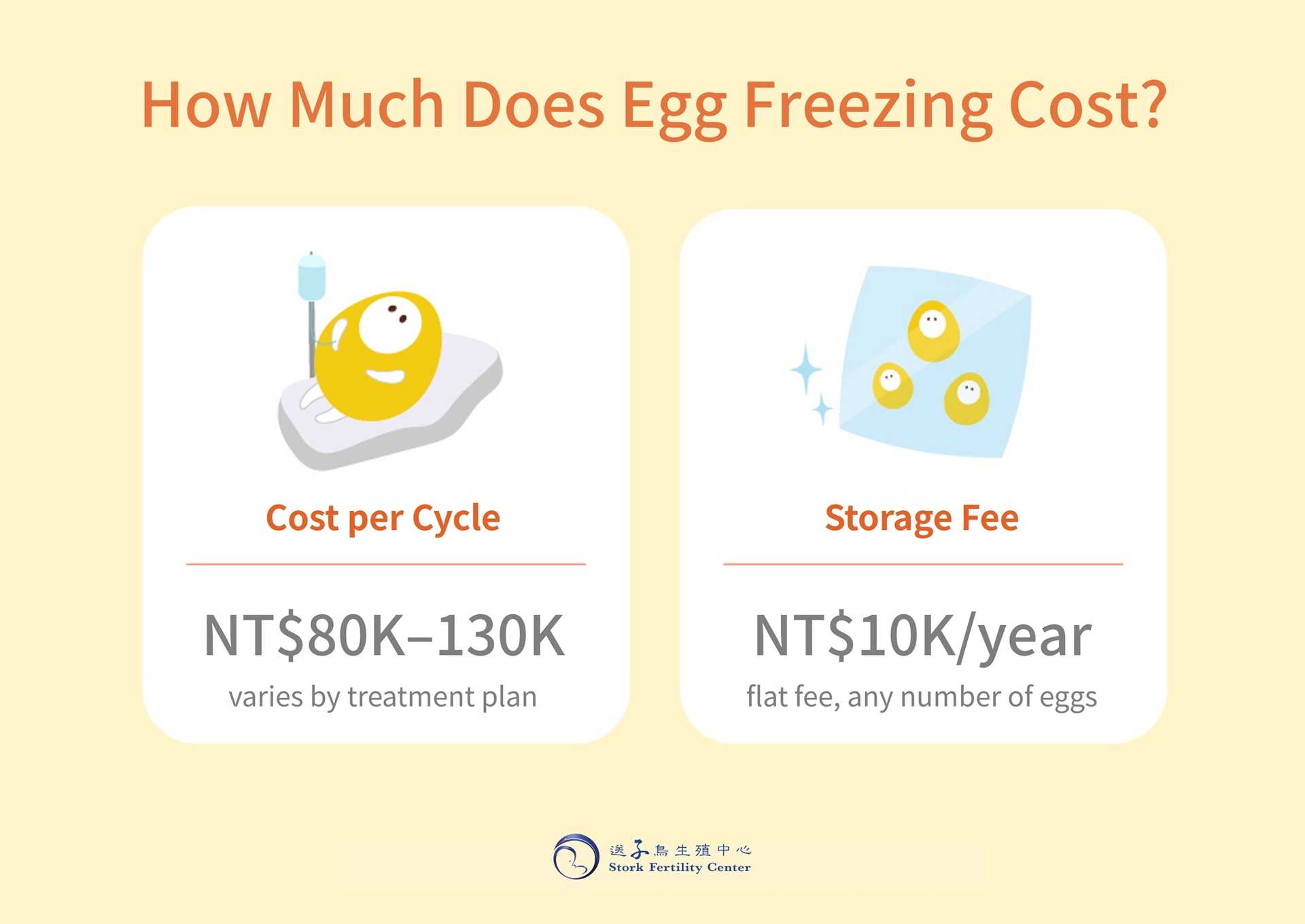
One egg freezing cycle costs about NT$80,000–130,000. The exact cost depends on your treatment plan and the medications you need. Compared with going through several egg retrievals at an older age to bring home one healthy baby, freezing your eggs earlier is the more affordable choice.
Get a Personalized Cost Estimate
Storage is a fixed fee of NT$10,000 per year (regular price NT$12,000), no matter how many eggs you freeze. You only pay until your eggs are thawed for use. That works out to less than NT$30 a day, cheaper than a cup of bubble tea.
What Tests Do You Need Before Egg Freezing?
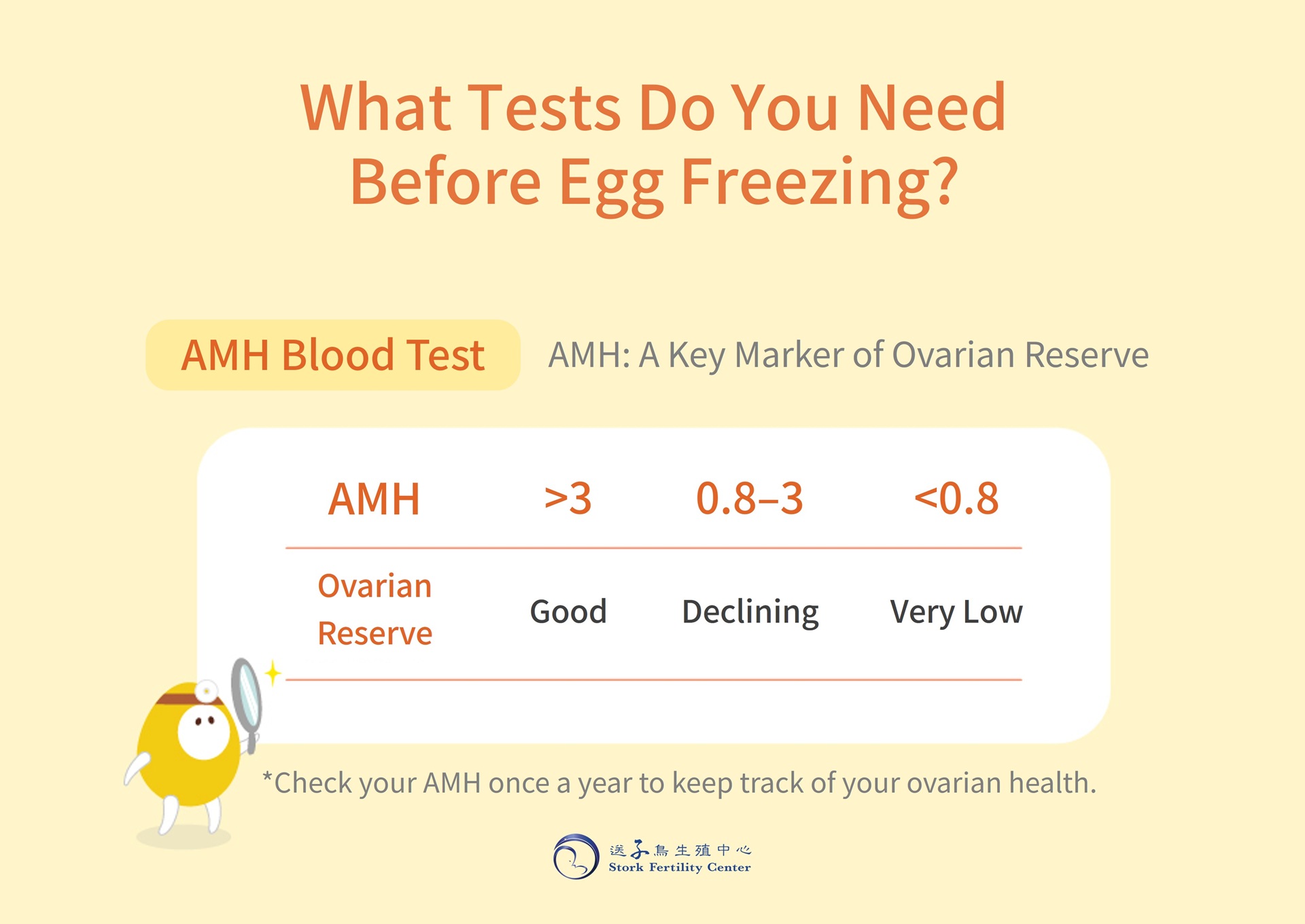
The key test before egg freezing is an AMH (anti-Müllerian hormone) blood test, which measures your ovarian reserve (how many eggs you have left) and gives a sense of your ovarian age. You can take it on any day of your menstrual cycle.
As a general guide, an AMH level above 3 ng/mL indicates a sufficient ovarian reserve, 0.8–3 ng/mL a declining reserve, and below 0.8 ng/mL a severely diminished reserve.
*We recommend that every woman checks her AMH once a year, so you can keep track of your ovarian health over time.
Start Egg Freezing Anytime at Stork Fertility Center
How Long Does the Egg Freezing Process Take?
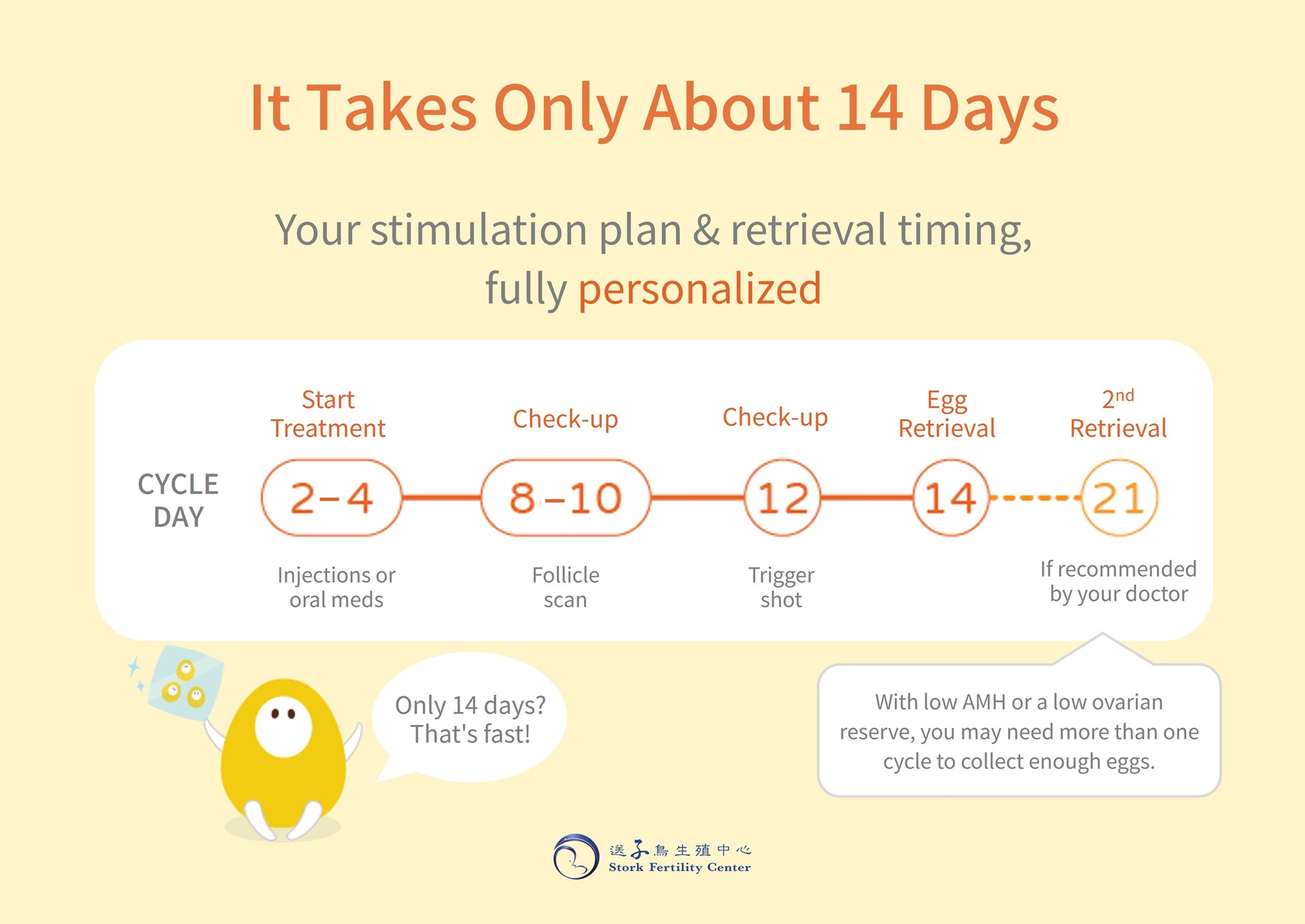
Egg freezing usually takes only about 14 days, with just 1–2 follow-up visits during treatment. At Stork, your doctor designs a personalized ovarian stimulation plan based on your health and chooses the best time for your egg retrieval. A typical timeline looks like this:
-
Day 2–4 of your period: Start ovarian stimulation with injections or oral medication
-
Day 8–10: Follow-up visit to monitor how your follicles are growing
-
Around day 12: Follow-up visit and trigger shot to help your eggs mature
-
Around day 14: Egg retrieval
The egg retrieval takes just 10–15 minutes. You'll be under anesthesia the whole time, so it feels like a short nap: when you wake up, it's already done.
Some women, such as those with a low ovarian reserve (low AMH), need more than one cycle to collect enough eggs. In that case, your doctor may recommend Stork's signature Double Egg Retrieval (two retrievals within one menstrual cycle), which helps you reach your target number of eggs faster. With a second retrieval, usually around day 21, treatment takes longer than 14 days, so your exact timeline will depend on your situation.
How Many Eggs Should You Freeze?
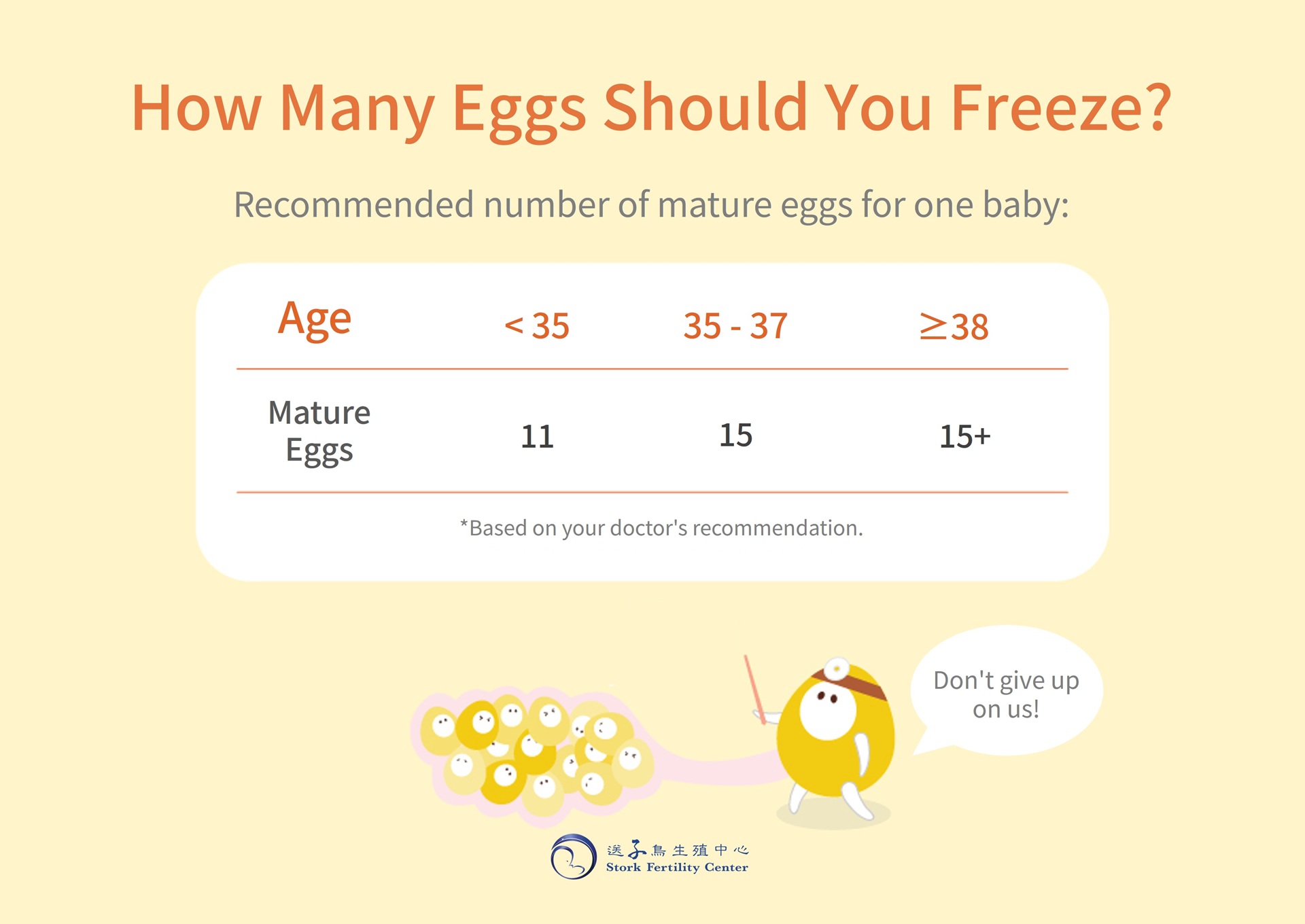
To give yourself a good chance of having one healthy baby, we generally recommend freezing the following number of mature eggs, depending on your age:
-
Under 35: about 11 mature eggs
-
35–37: about 15 mature eggs
-
38 or older: more than 15 mature eggs
These numbers are a general guide. Your doctor will recommend a target that fits your age, AMH level and family plans.
How Many Eggs Can You Get From One Egg Retrieval?
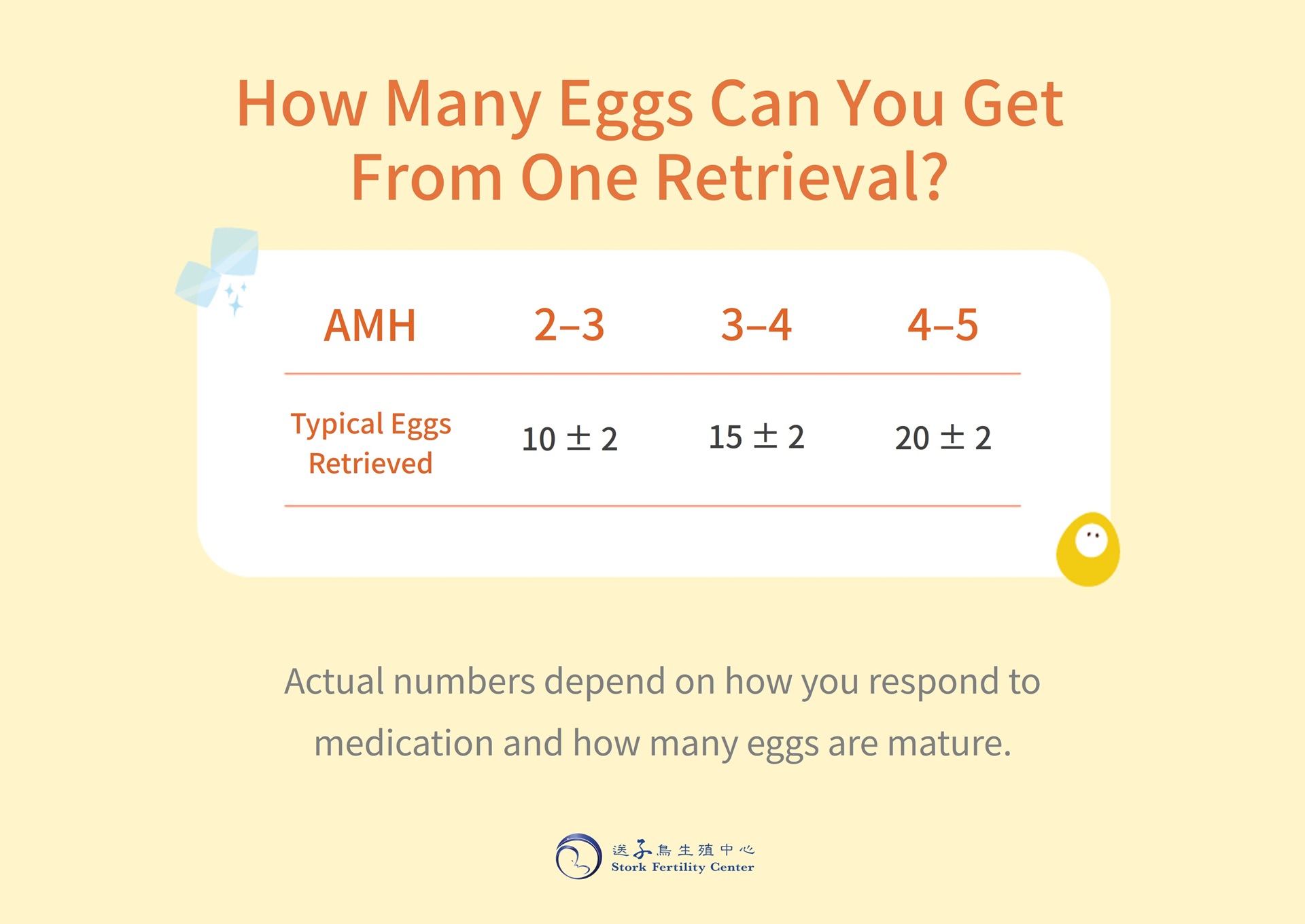
If your AMH is 2–3 ng/mL and you respond well to treatment, you can typically get about 10 ± 2 eggs per retrieval (one treatment cycle). Women with a higher AMH often get more: about 15 ± 2 eggs with an AMH of 3–4, and about 20 ± 2 with an AMH of 4–5. The actual number depends on how your body responds to the medication and how many of your eggs are mature, which isn't the same as how big the follicles look on ultrasound.
Your fertility comes down to two things: the number of eggs you have and their quality. Your egg count naturally declines over time, at a different pace for every woman, so it's worth checking your AMH regularly.
Egg quality is closely tied to age and declines as the years go by. If you want to keep your options open for the future, now is the best time to start planning egg freezing. At Stork, egg freezing isn't the finish line. Bringing your baby home is.
Have questions about cost or timing? Contact our team to book an AMH test and fertility assessment.
What Is Egg Freezing? A Complete Guide to Egg Preservation
Does Egg Freezing Have Long-Term Side Effects? Risks, Myths & Prevention
How to Get Pregnant After Egg Freezing: Process & Success Rates