As more women take charge of when they start a family, egg freezing has become one of the most popular ways to preserve fertility. But search for "egg freezing side effects" and you'll find plenty of worrying information. Will the injections make you gain weight? Is egg retrieval safe?
Drawing on our clinical experience at Stork Fertility Center, this guide explains how your body responds during egg freezing, what the real risks are and how we keep you safe, so you can plan for your future with peace of mind.
Does Egg Freezing Have Long-Term Side Effects?
In most cases, no. The discomfort some women feel during egg freezing is a short-term side effect, not a lasting after-effect. An egg freezing cycle takes about 2 weeks. During that time, medication stimulates several follicles to grow at once so more eggs can be retrieved, and most side effects come from the resulting hormone changes and enlarged ovaries. Once your period arrives after egg retrieval, your hormone levels return to normal, your ovaries shrink back to their usual size and the side effects go away on their own.
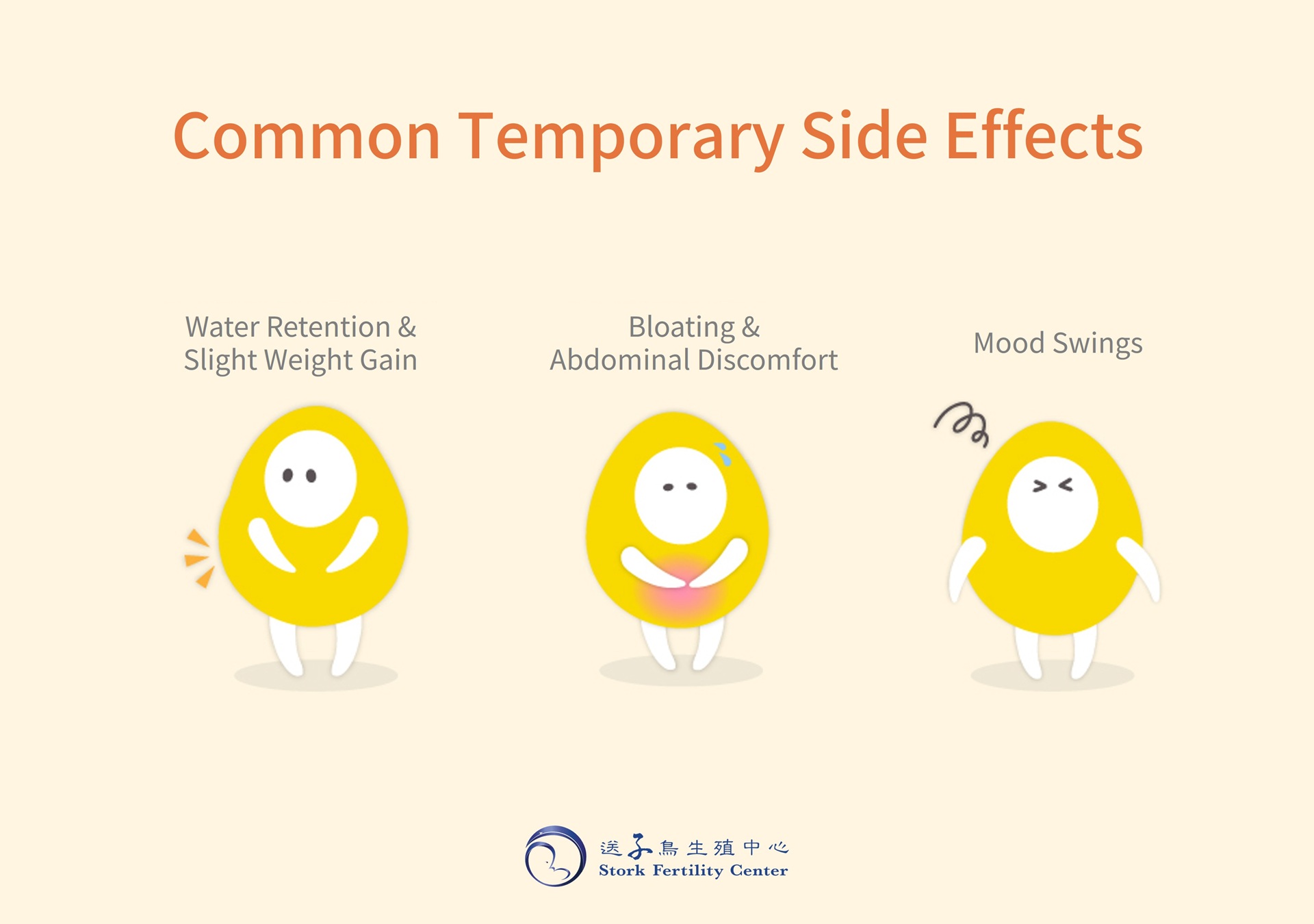
Common Temporary Side Effects
-
Water retention and slight weight gain: Stimulation medication raises your hormone levels, especially estrogen, which can cause temporary fluid retention. This is water, not fat, and it usually clears once your hormone levels fall.
-
Bloating and abdominal discomfort: As several follicles develop at the same time, your ovaries become larger. You may feel a dull ache in your lower abdomen, similar to period pain. This is a normal response.
-
Mood swings: Hormone changes can make your emotions feel more intense, similar to premenstrual syndrome (PMS).
-
Breast tenderness: Estrogen acts on breast tissue, which may make your breasts feel sensitive or sore.
-
Injection site reactions: Most stimulation medications today are given as subcutaneous injections with a very fine needle. A few women notice redness, swelling, bruising or itching where they inject, which usually clears up within a few days.
How Is Egg Retrieval Done, and Is It Safe?
Egg retrieval is a minimally invasive procedure, and modern retrieval techniques are well established and safe. Many women worry about the risks of surgery, so here's what actually happens:
-
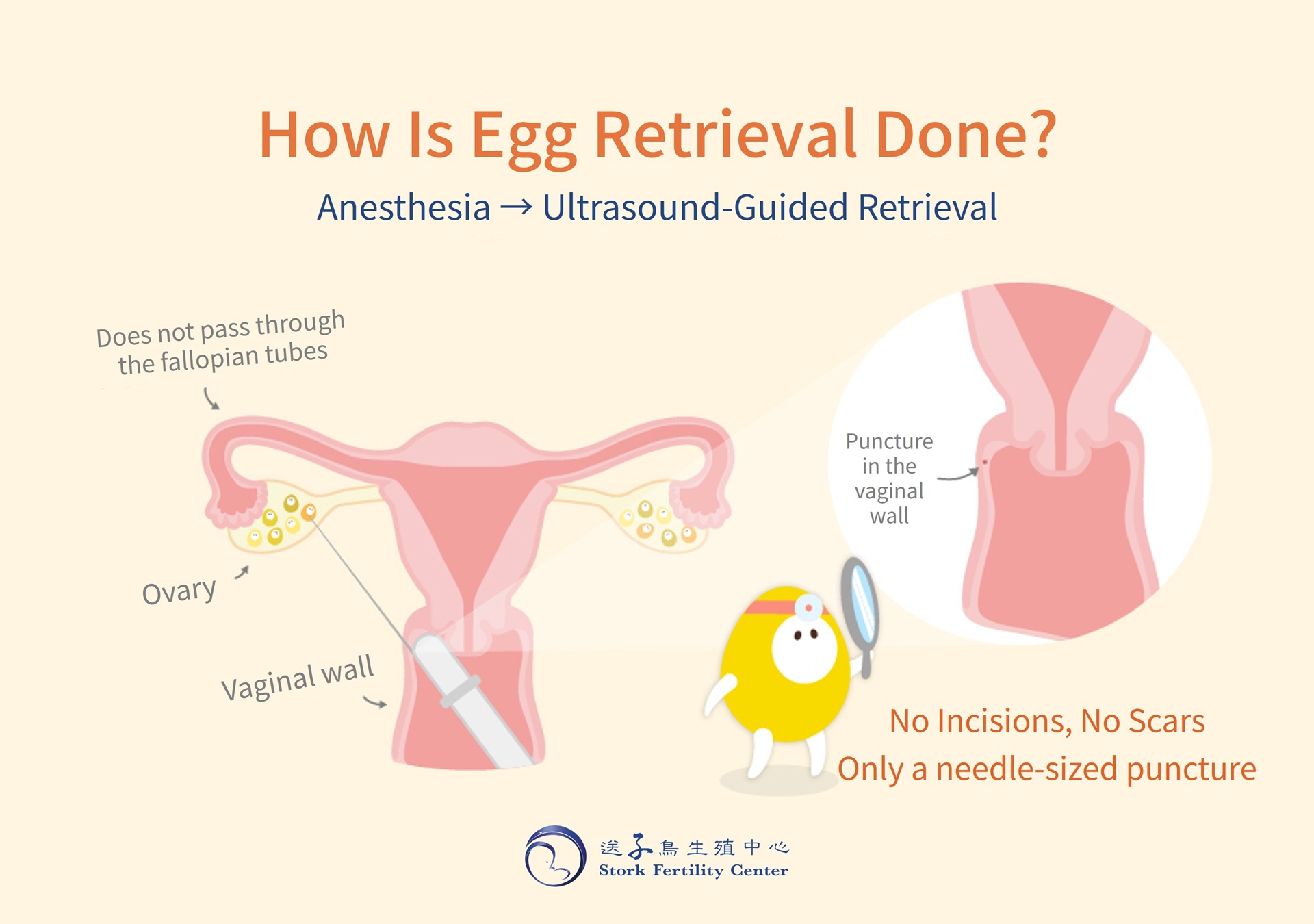
Ultrasound-guided retrieval: You'll be under general anesthesia, so you won't feel the procedure. Guided by transvaginal ultrasound, the doctor precisely locates each follicle and uses a very fine needle to draw out the follicular fluid containing your eggs. The needle passes through the vaginal wall into the ovaries and does not go through the fallopian tubes.
-
No incisions, no scars: Unlike laparoscopic surgery, egg retrieval leaves only a needle-sized puncture. The procedure takes about 10–15 minutes, and you can go home the same day once our team has checked that you're recovering well.
Because egg retrieval is still an invasive procedure, a small risk of complications can't be ruled out completely. Based on Stork's in-house data, complications occur in about 1% of cases. They include:
1. Bleeding
- Vaginal bleeding: The needle puncture in the vaginal wall may bleed slightly. This can usually be stopped by applying pressure.
- Internal bleeding: Occasionally, the needle may nick a small blood vessel on the surface of the ovary. Most of this bleeding is reabsorbed by the body, and laparoscopic surgery to stop it is very rarely needed. Some bleeding can also come from a corpus luteum (the structure a follicle leaves behind after releasing its egg) that ruptures because of external pressure.
2. Infection
Egg retrieval is performed under sterile conditions, but there is a very small chance (about 0.07%) of pelvic infection. Your medical team will usually give you preventive antibiotics.
3. Ovarian Hyperstimulation Syndrome (OHSS)
OHSS happens when the ovaries respond too strongly to stimulation medication. Hormone changes make the blood vessels leakier, so fluid moves out of the bloodstream into the abdomen or chest. We explain how we prevent it in the next section.
Other Rare Complications
1. Bladder injury
The main sign is blood in the urine. In most cases, the bleeding stops after the bladder is flushed with fluids, and only very rarely is a cystoscopy needed to stop it.
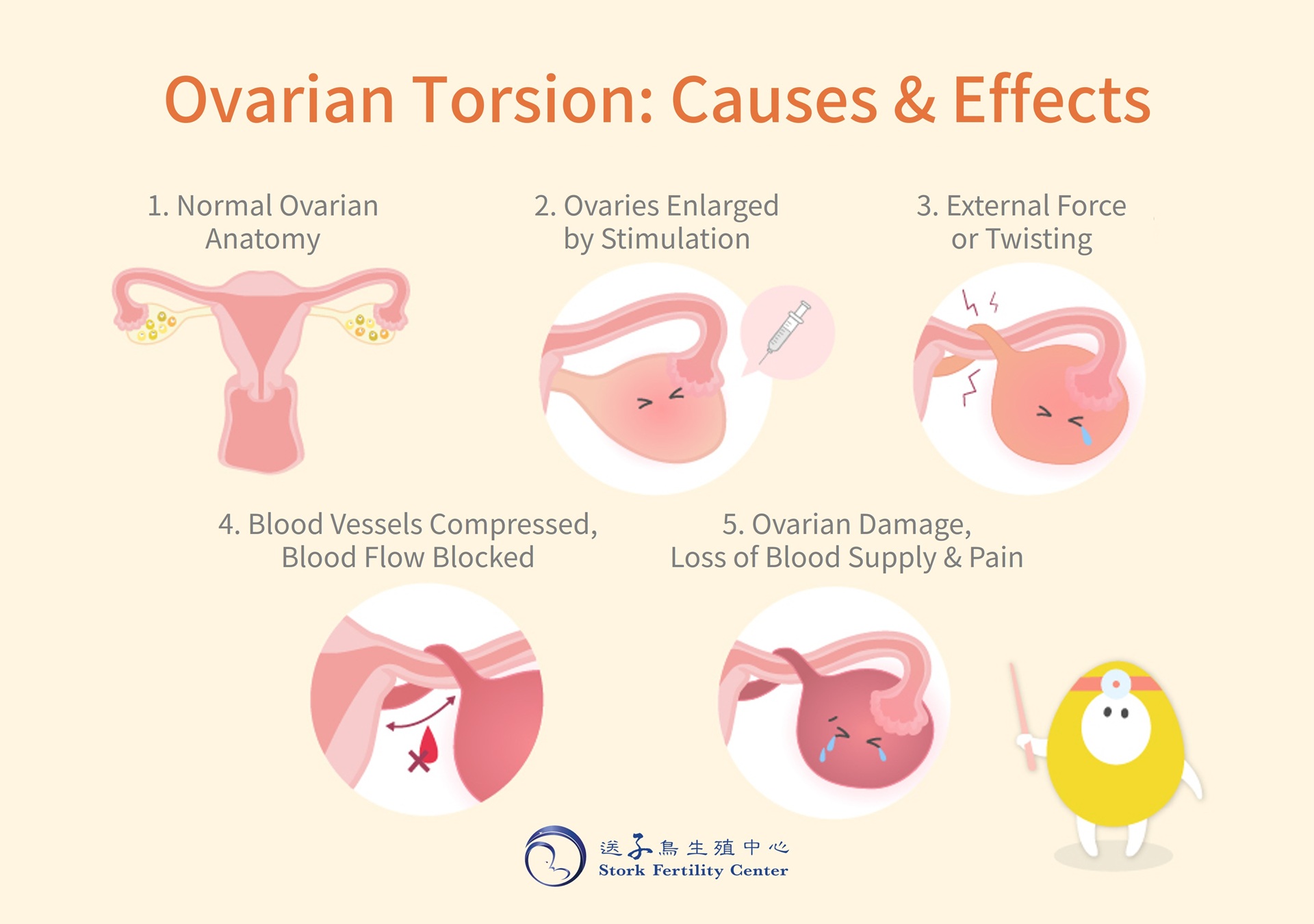
2. Ovarian torsion
Ovarian torsion happens when the ligaments that support the ovary twist and cut off its blood supply. Ovaries enlarged by stimulation are more likely to twist, especially with sudden or strenuous movement. It is a gynecological emergency, and one of the very few complications that can have lasting effects.
Complications after egg retrieval are uncommon, and they almost always cause clear symptoms. If you feel well after the procedure, there's no need to worry. If you have heavy bleeding, severe abdominal pain, a fever or difficulty breathing, go to the emergency department at your nearest hospital right away, and contact us by phone, LINE or WhatsApp at the same time.
How Does Stork Prevent Ovarian Hyperstimulation Syndrome (OHSS)?
At Stork, we prevent OHSS with a GnRH agonist trigger and close blood monitoring. OHSS is the egg freezing side effect that needs the most attention, and it affects about 0.5% of patients. Symptoms include severe bloating, passing less urine and shortness of breath.
Our Prevention Strategy: The GnRH Agonist Trigger
To keep you safe, Stork uses a personalized, precise stimulation plan:
-
GnRH agonist trigger: Instead of a traditional hCG trigger shot, we use a GnRH agonist to trigger final egg maturation. Its effects wear off quickly, which lowers the risk of OHSS.
-
A very low risk of OHSS: Combined with real-time monitoring of your blood hormone levels, this approach greatly reduces the risk of fluid build-up, so women with polycystic ovary syndrome (PCOS) or high AMH can also freeze their eggs safely.
Does Egg Freezing Cause Cancer or Early Menopause? 2 Common Myths
Myth 1: Egg Freezing Causes Ovarian or Breast Cancer
It doesn't. Many women worry that the hormones in stimulation medication could cause cancer. In fact, multiple studies have found no causal link between fertility medication and ovarian or breast cancer. An egg freezing cycle lasts only about 10–14 days, and your hormone levels return to normal soon after your period arrives, so the long-term effect on your body is minimal.
Myth 2: Egg Freezing Brings On Early Menopause
It doesn't. Each month, your body recruits a group of follicles, but usually only one matures and the rest are naturally lost. Egg freezing simply collects the eggs from the follicles that would have been lost that month. It doesn't draw on or use up your future egg supply, so it won't change when you reach menopause.
How Should You Prepare for and Recover from Egg Retrieval?
Before egg freezing, tell your doctor about every medication you take, especially weight-loss injections. After retrieval, eat well, stay hydrated and take it easy until your next period.
Before Egg Freezing: Stop Weight-Loss Injections
This is key to a safe egg retrieval. If you've recently used Mounjaro (tirzepatide) or other GLP-1 weight-loss injections, please note:
-
Why it matters: These medications slow down how quickly your stomach empties, which can lead to vomiting or aspiration pneumonia (when stomach contents are inhaled into the lungs) during anesthesia for egg retrieval.
-
What to do: For your safety, we recommend stopping Mounjaro or similar medication one month before egg freezing, and telling your doctor about any medications you've used when you come in for your consultation.
After Egg Retrieval: How to Look After Yourself
Any discomfort after retrieval usually eases within a week. Here's how to take care of yourself:
-
Eat plenty of protein: Quality protein such as meat, eggs and soy milk helps your body recover.
-
Stay hydrated: Drink plenty of water or electrolyte drinks to support your body's metabolism.
-
Take it easy: Strenuous exercise or heavy lifting can cause a corpus luteum to rupture or an ovary to twist. Until your next period, remember to be gentle with yourself.
-
Reach out early: For milder discomfort or anything about how you feel after retrieval that worries you, contact your Stork coordinator as soon as possible, and we'll assess whether you need to come back for a check-up.
-
Know when to get help: If you have heavy bleeding, severe abdominal pain, a fever or difficulty breathing, go to the emergency department at your nearest hospital right away, and contact us by phone, LINE or WhatsApp at the same time.
Why Choose Stork Fertility Center for Safe Egg Freezing?
Egg freezing is about keeping your options open for the future, not sacrificing your health today. With an experienced medical team and advanced lab technology, Stork Fertility Center supports you from your first assessment to aftercare, keeping discomfort to a minimum at every step.
Thinking about freezing your eggs? Contact us online, and we'll create a personalized plan for a more comfortable egg freezing experience.
Egg Freezing at Stork Fertility Center: What to Expect