Egg freezing (oocyte cryopreservation) is a fertility preservation method in which your unfertilized eggs are retrieved and rapidly frozen using a technique called vitrification. Freezing your eggs preserves them at their current quality, so you can use them for IVF in the future. Originally developed to protect the fertility of women with cancer, egg freezing has become a popular way for women today to plan ahead for a family.
Whether you haven't decided if you want children, aren't sure what the future holds, or want to focus on your career, your health or finding the right partner first, egg freezing gives you the flexibility and freedom to start a family when you're ready.
What Is Vitrification?
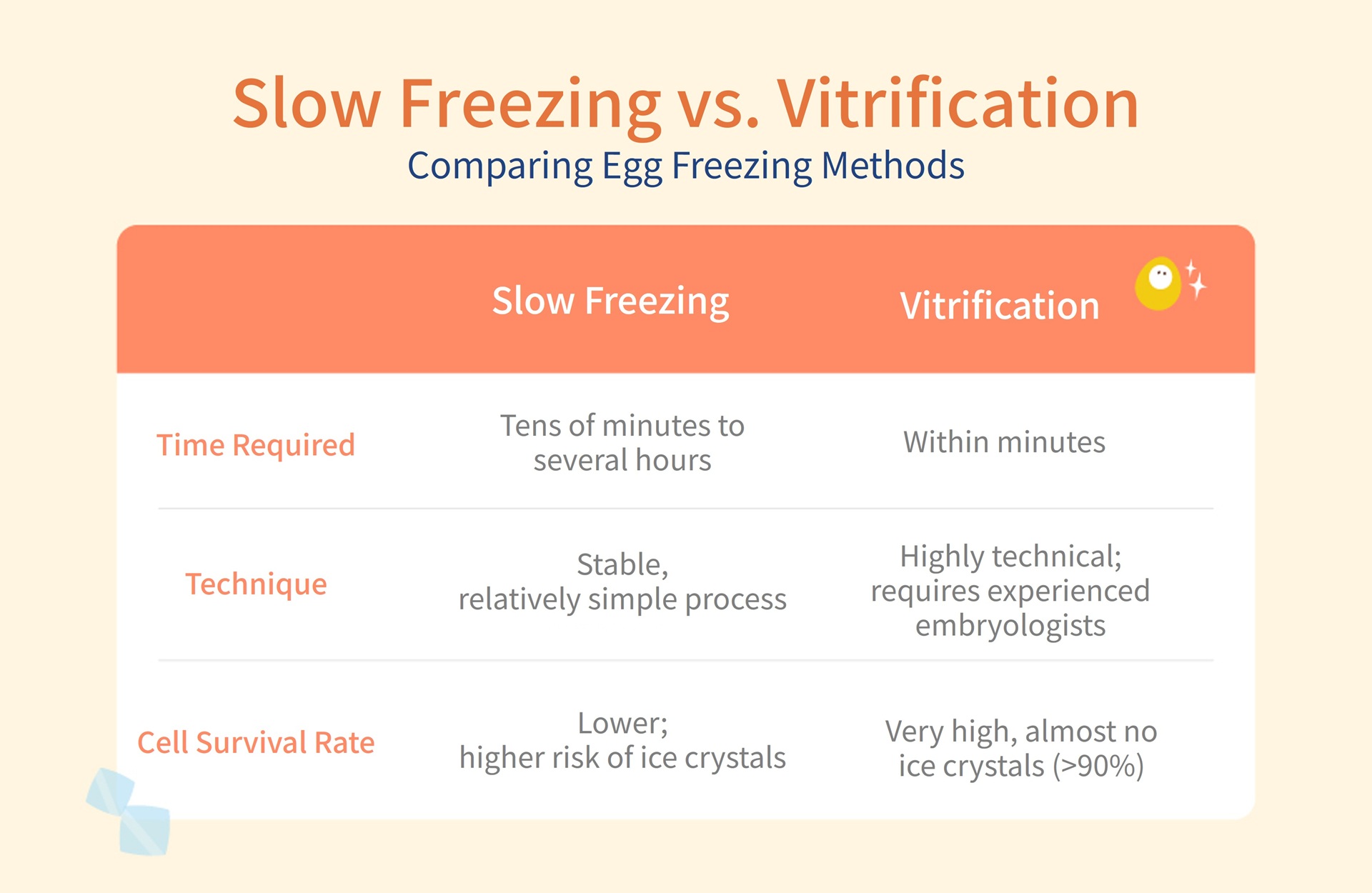
Vitrification is an ultra-rapid freezing technique that cools eggs or embryos so quickly that ice crystals don't have time to form inside the cells. They are then stored in liquid nitrogen at −196°C. Because ice crystals are what damage cells during freezing, vitrification greatly improves survival rates after thawing. It is the standard method for egg freezing today, and the method we use at Stork Fertility Center.
Compared with the older slow-freezing method, which takes anywhere from tens of minutes to several hours and carries a higher risk of ice crystal formation, vitrification takes only minutes and achieves cell survival rates above 90%. The trade-off is that it requires greater technical skill and experienced embryologists.
What Is the Success Rate of Egg Freezing? 2 Key Factors
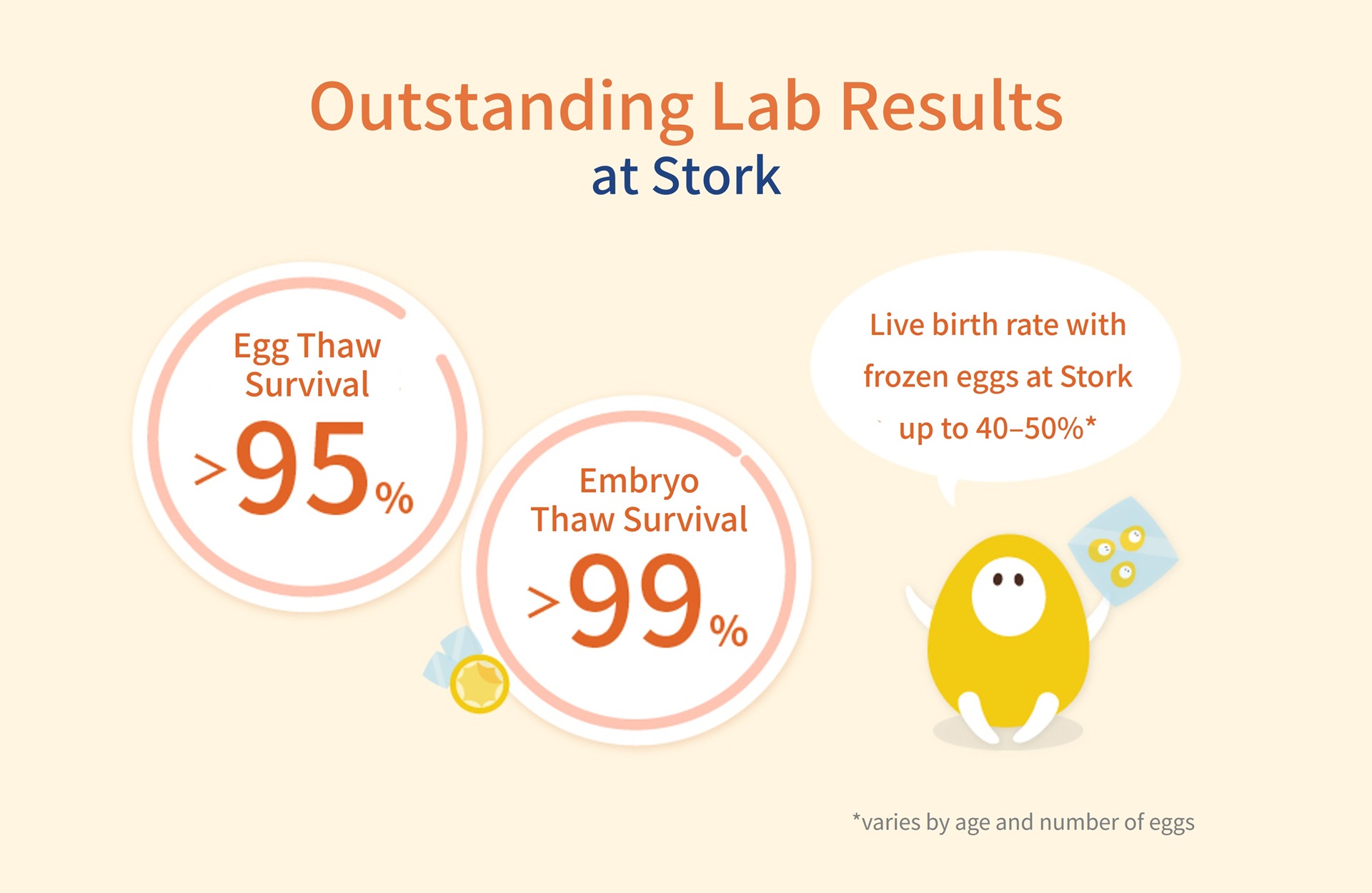
With vitrification, more than 90% of frozen eggs survive thawing, according to research in Taiwan and internationally. At Stork Fertility Center, our in-house data show an egg thaw survival rate of over 95%, giving you a strong foundation for a future pregnancy. Two factors make the biggest difference:
1. An Experienced Embryologist
Egg freezing is a highly technical process. Every step, from dehydration and cooling to sealing and storage, must be carried out precisely by a skilled embryologist. Without enough experience, eggs can be damaged, which affects their quality after thawing and your chances of pregnancy later. That's why choosing a fertility center with proven lab expertise is the first step to successful egg freezing.
2. Full-Process Monitoring in Stork's 4SG Lab
At Stork's 4SG Lab, every stage, from egg retrieval and freezing to labeling, storage and thawing, is managed with digital tracking and automated controls. This greatly reduces the risk of human error and mix-ups, so every egg is stored under the best possible conditions.
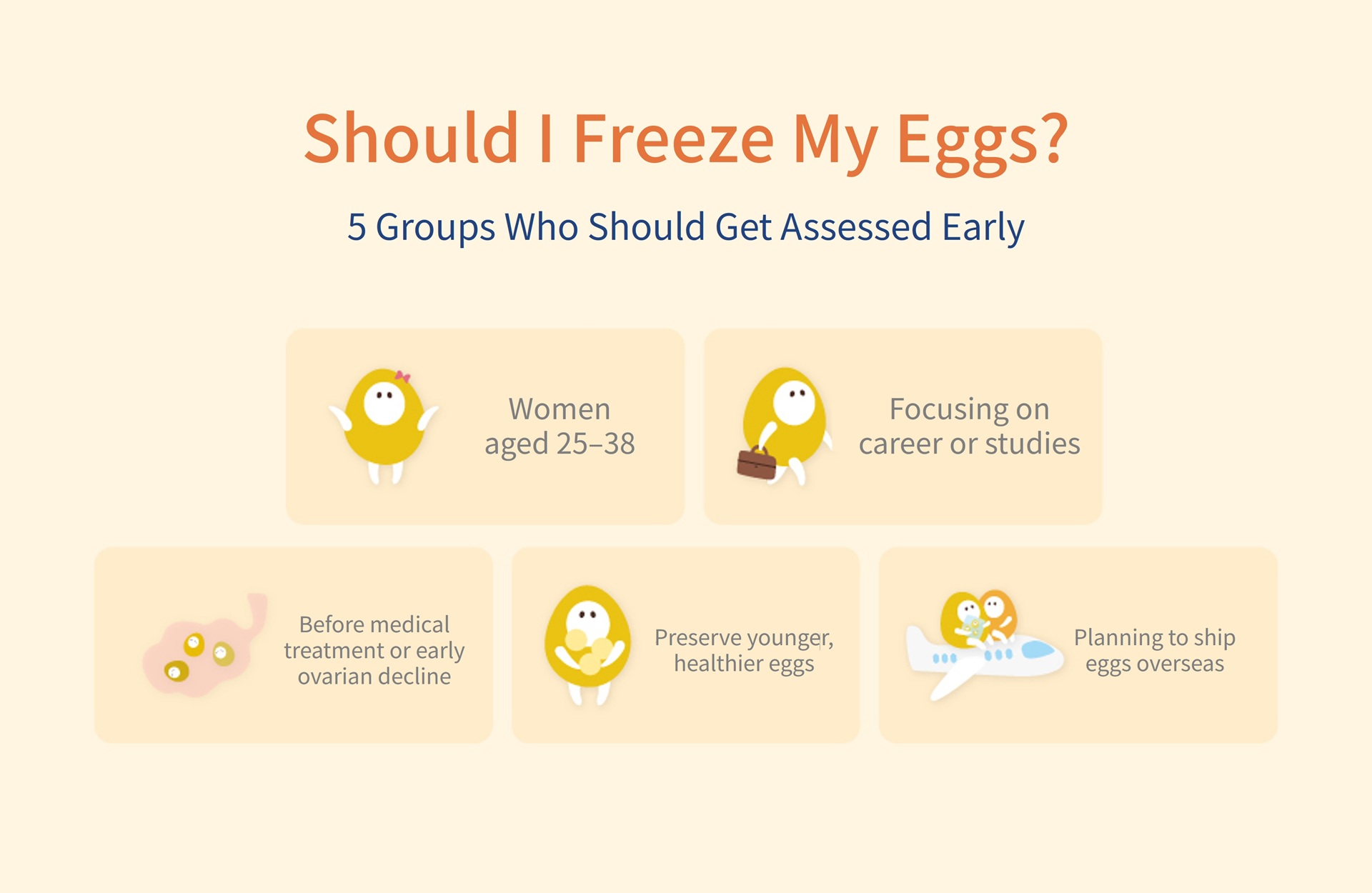
Who Should Consider Egg Freezing? 5 Groups Who Should Get Assessed Early
Egg freezing is worth considering if you're between 25 and 38, aren't ready for pregnancy yet, or face a risk to your future fertility. "I don't want a baby now, but I might later." As egg freezing technology has matured, more and more women are choosing to preserve their eggs before they're ready to start a family. Egg freezing is a practical choice that gives you freedom. It doesn't force you to decide your life path now. Instead, it gives you more options for later.
-
Women aged 25–38, whether or not you currently plan to have children
-
Women whose work, studies or health mean they aren't ready for pregnancy yet
-
Women at risk of premature ovarian insufficiency, or about to start treatment that may affect fertility (such as chemotherapy)
-
Women who want to preserve their eggs while they're at their best quality
-
Same-sex couples and women planning to have a baby in another country, who may later ship their frozen eggs overseas
Not sure if egg freezing is right for you? Start with an AMH test to check your ovarian reserve, then decide your next step. Contact our team to arrange a fertility assessment.
Egg Freezing at Stork Fertility Center: What to Expect
How to Get Pregnant After Egg Freezing: Process & Success Rates